Know Thyself

This word of leadership advice comes from a good friend and associate, Dan Maltby.  Dan holds a PhD. in leadership from The Drucker Institute (I think he knows a thing or two about leadership!)  At one time, Dan was administering the Masters in Organizational Leadership program at Biola University.  He was also head of The Leadership Project at that institution.  Back then I asked Dan, “What are the three most important things I need to know about being an effective leader?”  He said…

  1. Number one: Know thyself
  2. Number two: Know thyself
  3. Number three: KNOW THYSELF!
How well do you know yourself?

Is this self-knowledge and self-awareness stuff more of the ethereal, elusive “soft skill” emphasis we hear about in leadership, or is there really something of substance to Dan’s advice?  The simple answer:

Self-knowledge is not important… it’s ESSENTIAL.

Goffee and Jones claim that self-awareness is a leadership watershed: if you ain’t got it, you ain’t got leadership!   They shared the results of their research into effective leadership in a Harvard Business Review article in 2001, and said very clearly that people who lack self-awareness will NEVER be leaders.

Maybe you worked for a boss who lacked self-awareness.  People like that live in a bubble of denial about their worst behaviors, habits, and character traits.  They will shout at the top of their lungs, “I DO NOT YELL AT PEOPLE” and mean every word sincerely.  They are immune to feedback, and impervious to personal growth.  Ultimately, they are their own biggest obstacles to leadership success. 

Maybe you’ve worked with this guy!

Up Close and Personal

I was once assigned an executive coaching client whose colleagues (according to HR) described him as “arrogant, stubborn, insensitive, non-collaborative” and “close-minded.”  During one of our sessions, I asked him, “When people disagree with your idea, how do you typically respond?”  His answer was very revealing of the problem.  He replied, “I just explain to them logically, point-by-point, why they are wrong.”  I then pressed for an explanation.  I asked him, “Why, exactly, do you do that?”  He seemed taken back by that question, as if it were obvious why he responded to critics the way he did.  “ISN’T THAT MY JOB?” he said, “Aren’t I getting paid to have good ideas?  And if I can’t defend my ideas, how good can they be??” 

His response was a perfect illustration of an aspect of human nature I have observed many times in my long career of executive coaching:

We all have a logical reason for our insanity… a reason that makes sense to US.

Maybe you’ve worked with THIS guy!

I think you can imagine how most of his colleagues would respond to his practice of diminishing the opinions and ideas of other people.

I instructed him to respond differently…to say the following:

That’s interesting—tell me more! 

Then I urged him to listen carefully to their response—even take notes, to absorb all the details.  Then, when they finished, to use the following phrases to end the conversation on a positive note: 

Thank you for sharing that—I really appreciate it! 

There was a long pause while he collected his thoughts.  Then he responded with considerable energy:  “You mean, I can’t say anything in reply???  I’m not allowed to rebut their argument or tell them why I think they are WRONG????”  I told him, “No.  End the conversation on that positive note and walk away with a smile on your face.”

In just a few short weeks, the HR department head reported that feedback from his colleagues was becoming more positive—indicating that his co-workers were now seeing him as much less “defensive” and much more “open-minded” and “collaborative.”

Do you want another reason why self-awareness is so important?  Here’s a specific example: 

Self-awareness is critical for a hiring manager! 

If you want to find, hire, and lead a great team, you must first understand who YOU are (and aren’t!)  Joan Magretta (author of What Management Is) puts it this way: “The greater the hiring manager’s self-awareness, the better the new hire is likely to perform.”  Here’s why: leaders who understand their own strengths and weaknesses know how to hire people with the strengths they lack; give them appropriate assignments; and STAY OUT OF THEIR WAY and let them perform!

You can’t lead a great team unless you really KNOW YOURSELF.

Up Close and Personal

I worked for a CEO who once told me (in all sincerity): “Jim…I can do everyone’s job in this whole organization, and do it better than they can.”  I tried not to show my incredulity at this unbelievable (and completely unreal) expression of narcissism.  After a momentary pause, I pointed out to him, “But knowing you, Boss, I think you would quickly be bored to death doing the vast majority of them!”  He thought for a moment, and then grudgingly agreed:  “Well…you’re probably right.”

Don’t force your team to constantly be at odds with an interfering BOSS!!!

Leaders who think like this are in danger of becoming intrusive, over-managing, micro-managers…constantly interfering with their subordinates: second-guessing their decisions; over-riding their plans; meddling with their teams; and reducing their ability to operate and work independently, effectively, and efficiently.  I’ve seen it a hundred times, and in all types of organizations.

The other danger for non-self-aware leaders is their tendency to hire by supplementation instead of complementation.  It’s when the leader decides, “What we need around here is more people like ME!”  The beleaguered subordinates who report to this leader find themselves constantly resisting the pressure to THINK like the Boss; TALK like the Boss; ACT like the Boss; and MANAGE like the Boss.  It can be maddening for the managers who have a strong voice of their own, and are forced to waste their time and attention on yet another needless obstacle to their success in the organization.

Football teams need a diversity of talent to succeed…SO DOES YOUR TEAM!!!!

Self-knowledge gives a leader the ability to work well with a team that is armed with a diversity of strengths and gifts.  Magretta tells us, “Managers who give in to the ‘just like me’ bias … are only setting themselves up for failure.  Increasingly, managers and executives must be able to work effectively in teams that bring together diverse people, skills, and talents.”

If you would like to explore your potential for growth and remove obstacles to your success, we can help!  Our coaching fees are reasonable and our clients achieve real results—better performance; better performance reviews; promotions; and new leadership opportunities.  And if you want more great ideas for better leadership and management, take advantage of all the great ideas, tips, and tools you will find on this blog.

Until next time… Yours for better leaders and better organizations,

Dr. Jim Dyke – “The Boss Doctor” ™ helping you to BE a better boss and to HAVE a better boss!

Posted in Agility, Character, Collaboration, Conflict, Emotional Intelligence, Employee Engagement, Employee Motivation, Feedback, Hiring, Leadership, Management, Morale, Personal Growth, Personal Success, Self-Awareness, Success, Team Dynamics, Team Leadership, Teams | Tagged , , , , , , , , , | Leave a comment

Building Trust with The 4 C’s

Leaders MUST build trust with their people! 

That’s the advice of top business leaders and consultants who have observed the serious loss of trust in many organizations today.  In the July 2010 issue of Ignite! Newsletter from the folks at The Ken Blanchard Companies, Dr. Pat Zigarmi and Randy Conley explain what happens when workers lose faith in their organization:

“lack of trust creates cynicism, doubt, and anxiety that leads to…low energy and productivity.  …the result is that employees will stay with the organization and do their job because they need a paycheck, but not much more.”

If you have been in any of my management training seminars you may have heard me put it this way:

WE DON’T FOLLOW PEOPLE WE DON’T TRUST 

Very simply, if you want to lead your team with influence and inspiration, you must build trust with your people and help them build trust with one another.  Additionally, you must build trust with key colleagues as well—the ones with whom you must build “internal business alliances.”

How do you do you do that?  Trust is simple, but building it is not easy—it takes time!  But if you are serious about earning the trust of others, you must invest in what I call The Four C’s.

Build Trust With The Four C’s

STEP ONE: BE GOOD AT WHAT YOU DO

COMPETENCE.  Your team is counting on you to do your job as a leader and do it well.  It’s all about helping them succeed and get tangible results.  So make sure you…

  • Guide them with a clear vision
  • Equip them with the resources and skills they need to be effective in their work
  • Run interference for them with other departments and higher-ups and
  • Inspire them with your example. 

Your credibility as a leader begins with competence in your role as a supervisor, manager, or executive.  Your credibility as a colleague begins with competence in your job!

Is your WORD your BOND???

CHARACTER.  This is about acting with integrity and honesty so that when you speak, your people believe you.  It means treating your team members fairly and appropriately, holding them accountable for clear standards of attendance, behavior, and performance.  It means behaving in a way that reflects clear and consistent values.  It also requires open and honest communication—sharing accurate information with team members and colleagues that helps them to solve problems, resolve conflict, and build collaborative working relationships.

Do you REALLY care? Do your people know that???

CARING.  It has been said many times that “people don’t care how much you know until they know how much you care.”   Studies of effective leaders support this simple truth!  Survey after survey has shown that truly effective leaders not only show a strong personal commitment to the work—they show an equally strong personal commitment to the WORKERS.  The best leaders I know do this by getting to know their team members personally and individually—identifying their gifts, strengths, passions, motivations, values, interests, and priorities.  They also show their support by giving team members their time, their personal attention, a listening ear, and at times, a strong shoulder of encouragement and compassion.

Are you the same, reliable, trustworthy person every day???

CONSISTENCY.  I learned this from Mary Kay Ash, one of the most successful entrepreneurs in American business.  She exhorted her managers and executives to “earn the reputation of being someone who does what they say will do.”  In my management seminars I condense this to a set of palindromic initials: DWYSYWD (Do What You Say You Will Do).  The Ignite! Newsletter defines consistency this way: “It means [leaders] being accountable for their actions and being responsive to the needs of others so if leaders promise something they must follow through.  It also requires being organized and predictable so that people can see that the leaders have things in order and are able to follow through on their promises.”

Does this really matter?  YES—team leaders have enormous influence over their team members… more than they realize!

You have more influence as a leader than you realize!!

Tuckman showed us early on that team productivity rises when trust is built between the leader and the members of a team.  And now Kouzes and Posner have demonstrated through their research that when a leader establishes trust and credibility with their team members, there are powerful effects that team members experience…

  • a greater COMMITMENT to the organization
  • a stronger sense of OWNERSHIP of the organization
  • a greater sense of PRIDE in the organization… and
  • a higher level of TEAM SPIRIT! 

For more specific ways you can build trust with your people, read Chapter 2 of my book, Leading Teams–How to Inspire, Motivate, Lead and Succeed! You can view and download a description of the book HERE.

There are many other practical principles, tools and techniques that can help you become more influential and effective in your work—we specialize in helping leaders create the kind of team culture that promotes employee engagement, productivity, and job satisfaction!  Give us a call and find out how easy and affordable it is to bring this kind of high-impact help to YOUR organization and YOUR team!

In the meantime, stay tuned to this BLOG—we have more great ideas headed your way! And let us know what you think of this post–use the comment space provided. WE WOULD LOVE TO HEAR FROM YOU!

Until next time… Yours for better leaders and better organizations,

Dr. Jim Dyke – “The Boss Doctor” ™ helping you to BE a better boss and to HAVE a better boss!

Posted in Authority, Caring, Character, Collaboration, Communication, Competence, Consistency, Employee Engagement, Employee Motivation, Honesty, Influence, Integrity, Leadership, Management, Morale, Personal Success, Productivity, Success, Team Culture, Team Dynamics, Team Leadership, Teams, Trust, Uncategorized, Values | Tagged , , , , , , , , , , , , | Leave a comment

Great Advice From Top CEO’s – #23

Do what you say you will do!*

This issue’s great advice comes from Mary Kay Ash, the incredibly successful entrepreneur who founded Mary Kay Cosmetics.  She often advised up-and-coming leaders: 

“Be the kind of person that people can rely on to do what you say you will do.”

Here’s the simple truth: you are, in great measure, personally responsible for your reputation in the workplace!  Your behavior will define who you are in the eyes and minds of your colleagues and customers.  Wise leaders will take their behavior and their reputations seriously, and take pains to perform with consistency and integrity.

I have worked with individuals who did not guard their reputation well.  Every time they opened their mouth, I felt like flipping a coin, because half the time they made a promise, they failed to follow through and left me hanging!  You do not want this kind of 50% reputation!

Kouzes and Posner (authors of the ground-breaking book, The Leadership Challenge) distill it to this simple abbreviation:

DWYSYWD*

There’s also a famous word of advice that goes with this:

UNDERPROMISE AND OVERDELIVER

Be careful what you promise!!!

Let me simplify this a bit for emphasis: JUST DELIVER ON YOUR PROMISES!!  When you say you are going to do something…DO IT.  Follow through and make sure it happens.  Your team will come to trust you, and that’s a good thing—it will make you AND your team more effective, efficient, and productive.  And productivity is important EVERYWHERE.

The truth is, WE DON’T FOLLOW PEOPLE WE DON’T TRUST.  You know that it’s true for YOU… and you can be sure it’s true for everyone else as well!

Nobody likes bad news, but we still have to be HONEST about it!

One more thing—teach your team members the same principle!  Make sure they understand that it’s honesty and accuracy that you value, not hyperbole.  Make it safe for them to tell you the truth, especially if it’s bad news.  You cannot lead well unless you have a firm grasp of reality in every situation.  So… no sugar coating; no mincing of words; no flattering the king; and no hedging the truth.  If there are problems, then you identify them clearly and tackle them head-on with your best ideas, your best people, and your best effort.

Make sure you are building the right relationship with YOUR boss!

By the way, this is good advice for building a good relationship with YOUR boss.  Keep it truth-based, and everyone will be the better for it.  If you need any case studies to bolster this principle, just roll through the roster of big-time corporate screw-ups and failures that have peppered the headlines over the last decade—Enron, WorldCom, Tyco, Bear Stearns, Lehman Brothers, British Petroleum, Bernie Madoff—look deep enough and you will find false or misleading information, stone-walling, or out-and-out fraud in every one of these examples.

If you need help building the right truth-based culture for your team or your organization, we can help!  Call today and find out how our values-based leadership and management training can help your people communicate better, work together more effectively, and produce real results that can make a difference!

In the meantime…stay tuned to this blog for more great insight and tools!

Until next time… Yours for better leaders and better organizations,

Dr. Jim Dyke – “The Boss Doctor” ™ helping you to BE a better boss and to HAVE a better boss!

Posted in Authority, Collaboration, Communication, Customer Service, Employee Engagement, Employee Motivation, Honesty, Influence, Integrity, Leadership, Management, Morale, Personal Success, Success, Team Culture, Team Dynamics, Team Leadership, Teams, Uncategorized, Values | Tagged , , , , , , | Leave a comment

Great Advice from Top CEO’s – #22

PEOPLE…are a LEADER’S most valuable resource.

You are only as successful as your people!

This is a variation of another great piece of advice that comes from more than one wise source:

All other resources can and must be managed…but PEOPLE must be LED. 

It’s a reminder of the difference between a THING and a PERSON. 

I often state the principle in my management training seminars and ask for a show of hands of anyone who agrees with the principle.  The hand-raising always shows UNANIMOUS agreement.  I then typically follow up with another question:

Do you know WHY people are your most valuable resource???

NOBODY EVER RAISES THEIR HAND!

So…allow me to explain exactly WHY people are your most valuable resource, as a leader…

Every OTHER resource you manage is finite and has built-in limitations!

  • Show me your BUDGET, and I’ll tell you exactly how long the money will last until it runs out.
  • Show me your FACILITIES, and I’ll tell you exactly how much stuff and how many people you can cram into it.
  • Show me your MATERIEL, and I’ll tell you exactly when you’ll run out of supplies, and when your equipment will wear out or become obsolete.

But NO ONE…and I mean NO ONE…has EVER BEEN ABLE TO MEASURE the potential of even ONE HUMAN BEING.

Are you seeing the potential in YOUR people???

You don’t even know what YOUR potential is!

I can say that, because I’m still learning and experiencing what MY potential is!

Here’s the TRUTH: HUMAN BEINGS possess INCALCULABLE POTENTIAL. 

That’s why your job as a leader is to encourage, guide, support, and MODEL the continuing growth and development of your people!

Here are the important questions for you to consider, as a leader:

  1. How are you continuing to grow and develop in your role and responsibilities?
  2. When are you having conversations with your people about THEIR growth and development?
  3. What resources and opportunities are you providing, for the growth and development of your people?
  4. What incentives are you providing, to encourage your people to focus on their growth and development?
  5. How are you recognizing the growth and development of your people, and making their progress visible to the rest of your team, and to higher-ups?
Are you talking to your people about this????

Up Close and Personal

One of my favorite leaders (and friends) is Tony Knight—an individual with a unique talent for effective management and leadership.  He accepted a position as a team leader for an Accenture project that provided a call center for a major corporate client.  One of his first acts was to meet with each of his team members in one-on-one sessions.  One of his questions in those meetings was, “Where do you want to go in your career?”  For each person, he offered suggestions about resources they might consider using as part of their personal and professional development: e.g. a book they might find helpful; an evening class at the local community college that would add to their professional skills; or one of the many free online courses available to them as an employee of the company.  In their regular monthly one-on-one sessions that followed, he would keep the conversation going, asking them about what they read; what courses they took; what learning they accessed online.  Over time, it was obvious to his team members that he cared about them and was invested in their future.  It was one of many reasons why his team was highly engaged, high-performing, and extremely loyal.

Successful GE CEO Jack Welch offered this opinion on the subject:

Great leaders love to see people grow. The day you are afraid of them being better than you is the day you fail as a leader.

Another piece of advice I give to aspiring managers is closely related…

Be the kind of manager that helps your people get promoted.

This might seem a bit counter-intuitive.

One might think that a team leader would naturally resist constantly losing their best people—always having to deal with the challenge of leadership succession on their team.  Why would they invite this difficulty by purposefully moving their best people up and out of their team? 

What possible benefits would you gain by doing this??? 

Leaders with experience know the answer to this question!

1.  The word spreads quickly and widely in any organization:  If you have any kind of potential, get on this manager’s team—they will help you get promoted!

These leaders get the best people knocking on their door, eager to join their team and give their best effort!  They don’t have to spend a lot of time looking for good people for their teams—the people find THEM.

2.  Their team members are highly engaged, highly motivated, and highly effective.  They know that their hard work has a much better chance of being rewarded, by working with a leader who is invested in their advancement.

3.  They create a team culture of high performance that motivates team members to do their best work.  This happens because their team members work with fellow team members who are just like them—highly engaged, hard-working people—who inspire and encourage one another.

4.  They also experience a highly loyal workforce—subordinates who are much more likely to support their decisions; their strategies; their assignments; their leadership.

5.  For all these reasons, team leaders like this gain a high-performing team that supports their success in their position in the organization.  This, in turn, often leads to the advancement of the team leader/manager.   Also…

6.  Beyond the obvious personal advantages to the manager, there are political benefits to the team leader and the team: valuable visibility with key leaders at higher levels; greater consideration for increasing the team’s budget; better chances for gaining additional personnel.  Executives love success, and so they are more likely to support a successful manager by giving them more resources and expanded opportunities.

If you are looking for ways to become a better team leader, we can help!  We have experience working with teams and team leaders, helping them to work together more effectively.  And we can help you and your team do the same.  Give us a call, and start your journey of leadership growth today!

Until next time… Yours for better leaders and better organizations,

Dr. Jim Dyke – “The Boss Doctor” ™ helping you to BE a better boss and to HAVE a better boss!

Posted in Agility, Employee Development, Employee Engagement, Employee Motivation, Leadership, Learning, Management, Morale, Personal Growth, Personal Success, Potential, Professional Development, Success, Team Culture, Team Dynamics, Team Leadership, Teams, Uncategorized, Vision | Tagged , , , , , , , , , , , | Leave a comment

Great Advice from Top CEO’s – #21

Practice Fu Pan.

This advice is a perfect follow-up to my last blogpost.  It comes from LENOVO founder Liu Chuanzhi, who referred to it in an interview published in FastCompany MagazineLENOVO is the Chinese company that purchased IBM’s PC division.  It has become one of the fastest-growing and most successful companies in the PC industry, holding the number two spot worldwide (behind HP).

LENOVO’s success has been fueled in large part by its emphasis on speed—not merely in computing speed, but in designing, production, marketing, and distribution.  The practice of FU PAN represents a deliberate attempt to couple this speed with an intentional slowing-down, in order to apply thoughtful analysis to every event, success, or failure.

Replay the chess board – Analyze what happened

Take a close, thoughtful look – analyze what happened.

Liu defines FU PAN as “replaying the chess board.”  The idea is to carefully examine your actions in order to improve the next time.  LENOVO managers are trained to apply FU PAN to everything from a quick review of a workday incident to an in-depth analysis of a key process or major initiative.  It is a vital response to any failure or mistake.

Why is this such an important practice?

CFO Wong Wai Ming is quoted in the FastCompany article:  “The most dangerous thing is to be successful.  You then think every decision is the right one.  That’s why you have to review what you do.”

Past success can get in the way of future success – if you’re not careful!

Past success can make you too arrogant to keep succeeding…if you’re not careful!

I have often said that the biggest barrier to future success in any organization is its current success!  Time and again I have seen leaders in an organization develop a hubris that invades their attitudes and mindsets—the belief that “we will succeed in the future because we have already succeeded.”  That attitude feeds the abhorrent practice we all seek to avoid—resting on our laurels.

It also attracts a certain kind of employee—the person who is eager to work for a company with a “name.”  One long-time leader I know put it this way:  “When I joined this organization, we all came here because we wanted to build a great company.  Now, people are coming here because they want to WORK at a great company.”  This difference is subtle, but it makes all the difference in the world—the difference between success and failure!

The secret of FU PAN is to apply it to the analysis of success as carefully as you use it to examine failure

Get your team to work together to LOOK, THINK, and LEARN.

The practice of FU PAN with your team begins with YOU.  Start by using this method with your own work—your decisions, interactions, meetings, and work habits.  Then introduce it to your team members.  Use it to debrief your team’s work.  Set aside one of your team meeting agenda items to debrief recent projects and assignments.  Ask your team members to apply the practice to their own work and report their insights to you and to other team members.  Share best practices as a team.  Send the strong message:

“I want us to be constantly learning and getting better.” 

For help in applying FU PAN (and other leadership techniques) CALL US!  We can help!  We can facilitate your team meetings and executive retreats with fresh approaches designed to meld people into a collaborative team; break through resistant company culture; and create new ways of thinking, planning, and working.  And STAY TUNED to future posts for more great ways to improve your leadership!

Until next time… Yours for better leaders and better organizations,

Dr. Jim Dyke – “The Boss Doctor” ™ helping you to BE a better boss and to HAVE a better boss!

Posted in Agility, Coaching, Collaboration, Communication, Creativity, Decision-making, Events, Failure, Innovation, Leadership, Learning, Management, Mistakes, Problem-Solving, Success, Team Culture, Team Dynamics, Team Leadership, Teams, Work | Tagged , , , , , , , , , , , , | Leave a comment

Great Advice from Top CEO’s – #20

Learn from mistakes and listen to feedback.

This issue’s great advice comes from Sir Martin Sorrell, CEO of WPP.  This is what he recommends, if you want to make better decisions!

It might be a little uncomfortable, but you need to listen to feedback!

Sorrell speaks to the realities that executives face in today’s fast-paced business environment, where leaders must be able to react quickly to rapidly-emerging opportunities.  He emphasizes…

  • the need to experiment
  • the need to tune-in to intuition, and
  • the need to look for moments of unique inspiration. 

In turn, he recommends a decision-making process to fit this environment—one that is “quick, flexible, and largely informal.”

Get the facts and figures, too!

Take time to crunch the important numbers, too!

But Sorrell also urges us to include a rigorous analysis with supporting data and some formal processes as well.  Additionally, he recommends sounding out relevant players in the process: key clients, suppliers, competitors.  Here is his advice:  Try to identify individuals you trust who have no agenda in the issue at hand. 

Tune in to your internal critics!

Be a good listener – to the people you trust for honest feedback!

Xerox CEO Anne Mulcahy supports the value of feedback.  She says, “You need internal critics: people who know what impact you’re having and who have the courage to give you that feedback.”  She adds, “I learned how to groom those critics early on, and that was really, really useful.  This requires a certain comfort with confrontation, though, so it’s a skill that has to be developed.”  So… how do you go about mining these internal critics for their ideas and opinions?   Mulcahy uses an assertive approach to gain their input.  She asks point-blank,

“What are you thinking?  I need to hear.” 

Additionally, leaders must take care to craft a communication climate that supports open and honest feedback from team members—a team culture that doesn’t “shoot the messenger.”  Check out my blogpost on June 4, 2020 for lots of practical tips and resources that will help you do this!

Will any of this advice guarantee a great decision EVERY TIME?  Unfortunately, NO.  Sorrell reminds us that mistakes are unavoidable!  He explains, “we all make mistakes all the time… However, the only way to avoid making mistakes is to avoid making decisions… But then the company would grind to a halt.  Instead, learn from mistakes…”  Author Jim Collins recommends that leaders conduct an “autopsy without blame.”  Take a hard look at the mistake and learn from it, without pointing the finger at specific persons or teams.

If you want your team to develop better decision-making and problem-solving skills, we can help!   We can teach you and your people how to think more creatively and collaborate more effectively so you can solve the tough problems you are facing and overcome the difficult challenges coming your way.  Call us today!  In the meantime, stay tuned to this blog for more great ideas to improve your leadership!

Until next time… Yours for better leaders and better organizations,

Dr. Jim Dyke – “The Boss Doctor” ™ helping you to BE a better boss and to HAVE a better boss!

Posted in Collaboration, Communication, Creativity, Decision-making, Emotional Intelligence, Feedback, Innovation, Leadership, Learning, Management, Mistakes, Personal Growth, Personal Success, Problem-Solving, Professional Development, Risk, Self-Awareness, Uncategorized, Work | Tagged , , , , , , , , , , , , | Leave a comment

Great Advice from Top CEO’s – #19

Make a personal connection with peers you trust.

Build helpful friendships with peers you trust!
— Image by © Royalty-Free/Corbis

This issue’s great advice comes from Derric Johnson, a mentor of mine who has a great way of expressing down-to-earth wisdom with real practical benefit.  Early in my career he advised me to BUILD SOME FRIENDSHIPS WITH OTHERS IN YOUR INDUSTRY AT YOUR SAME LEVEL—PEOPLE YOU TRUST—PEOPLE YOU CAN GO TO FOR ADVICE, ENCOURAGEMENT, SUPPORT, AND FEEDBACK.

I followed his advice, of course (and am STILL following it, by the way) and found the value of having trusted colleagues I could go to for practical, professional, and emotional support.  Sometimes, I would draw from this priceless well for advice to deal with a difficult challenge.  Other times, I would gain valuable feedback on my ideas, strategies, and personal growth issues.  And many times I would just need an understanding shoulder to cry on—an opportunity to “vent” a little and get some therapeutic relief for particularly annoying realities!

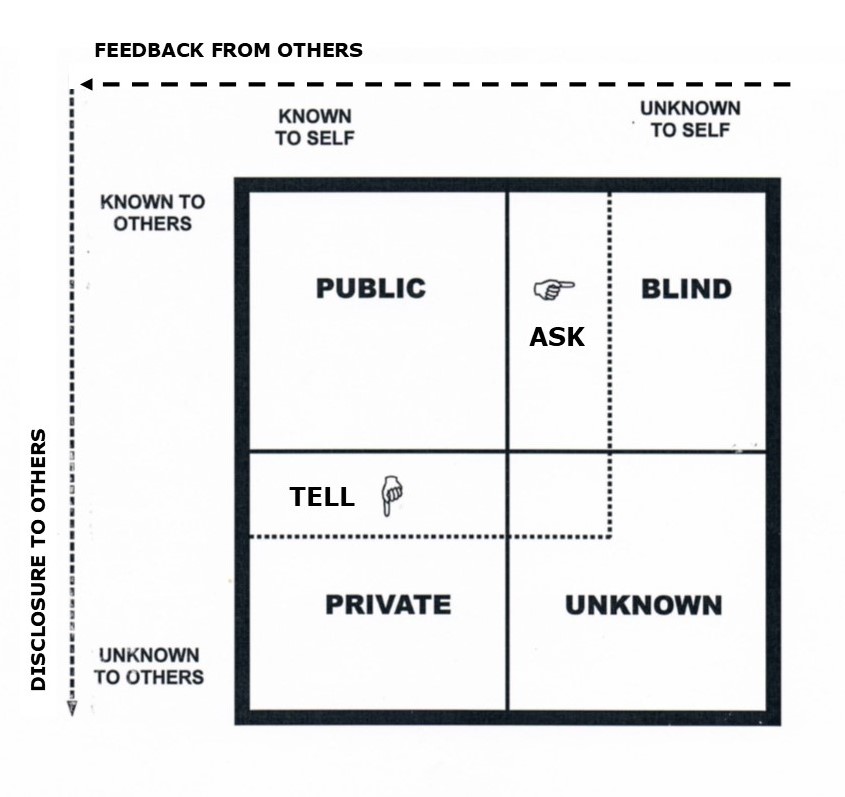
If you do a little research into the Johari Window, you will find a nice explanation for the role of trusted, honest “observers” who can help us see our blind spots and provide the support and feedback we need to address difficult personal growth issues.  We all benefit from that external point of view in our lives!  It’s even more helpful when they can relate to the unique challenges we face in the workplace.

The JoHari Window

Feedback from people you trust is INVALUABLE fodder for your personal growth!

It’s mutual—there’s real reciprocity at work!

What surprised me about this important relationship was its inherent mutuality—I found myself on the giving end of the experience as often as the receiving end.  I discovered that I could help the other person in the same ways that they were able to help me!

Can spouses help us with our work-related issues?  Of course!  But it’s different, isn’t it?  They usually aren’t familiar with the industry-specific challenges we face—the details of our work that give shape to our daily frustrations. 

It wasn’t until I did some research on mentoring that I found a name for this kind of relationship.  I ran across it in the writings of Robert Clinton, who described this person as a “peer co-mentor.”  The title captured perfectly the level and mutuality of this helpful relationship.

The higher you rise, the more isolated you become!

Why is this important?  Most leaders become increasingly isolated as they rise in the organization.  The CEO in the ivory tower is a cliché for a reason—it happens more often than not.  It’s one of the reasons good decision-making becomes more difficult at higher levels in organizations—because authority and responsibility in the C levels tend to dampen opposing opinions and ideas.  Senior executives especially need honest and insightful sounding-boards to help them process strategic decisions and spot debilitating personal weaknesses.  Peers are often more able to fulfill this need than subordinates.

It gets lonely at the top!
— Image by © Royalty-Free/Corbis

It’s also why executive coaches can be so helpful!  I have found that confidential sessions with a professional coach create a climate of openness and vulnerability that often help cautious (and closed) executives communicate more honestly and receive constructive criticism more readily. 

If you need help addressing some issues that are preventing your continued success and promotion (especially if those issues have been presented to you during a critical performance review), we can help!  Call today and find out how executive coaching can work for you or for one of your key subordinates who needs help!

And by the way…You, too, can profit from Derric Johnson’s valuable resources and creative thinking!  Visit and explore his website at the following address:  www.DerricJohnson.com

Until next time… Yours for better leaders and better organizations,

Dr. Jim Dyke – “The Boss Doctor” ™ helping you to BE a better boss and to HAVE a better boss!

Posted in Career, Coaching, Collaboration, Creativity, Decision-making, Emotional Intelligence, Leadership, Learning, Management, Personal Growth, Personal Success, Problem-Solving, Professional Development, Self-Awareness, Uncategorized, Work | Tagged , , , , , , , , , , | Leave a comment

Great Advice from Top CEO’s – #18

Get to Know Your People Personally

This comes from Michelle Peluso, CEO of Travelocity.  She says, “If you treat your employees as unique individuals, they’ll be loyal to you and they’ll perform—and your business will perform, too.”

Make a personal connection with your people!
— Image by © Royalty-Free/Corbis

Like father like daughter

Her father is one of her guiding examples:  He knew his employees and what was happening in their lives… “Sally’s gotten accepted into an MBA program,” he’d say excitedly, “and we’re going to figure out how she can do that part-time.” Or… “John’s wife just had a baby girl!  We’re going over this weekend to see her.”

How does Michelle apply this principle as a CEO?

“At a 5,000-person global organization, I simply can’t know everyone personally. But I can apply my dad’s techniques in a scaled-up way that lets me know as many people as possible—that encourages managers to do the same, and that makes our employees generally feel that this is a place where someone’s looking out for them. I often visit our different offices; I hold brown-bag lunches every week; I regularly e-mail the whole staff about what’s going well and what needs to improve; I hold quarterly talent management sessions with my direct reports; and I constantly walk the halls. When anyone at Travelocity e-mails me, I respond within 24 hours. I read every single word of our annual employee survey results and of my managers’ 360-degree performance feedback—and I rate those managers in large part on how well they know and lead their own people.”

Up Close and Personal

One of my favorite leaders, David Payne, applied this principle to his management of a failing factory (losing over three million dollars a year when he took over).  Under his leadership, the factory not only became a profit center for his company, it eventually became the leading profit center of his company!  A key element of his successful leadership was his ability to make personal connections with his workers. 

Get out of your office and “Manage By Wandering Around” (MBWA)

David used MBWA* time to interact daily with his factory employees and learn what was happening with them personally.  He discovered important milestones in his workers’ lives (e.g. a new baby; a community action award; educational achievements).  This gave him the opportunity to affirm and encourage his people—which sent the message to them: You are unique! You are important! You matter to me!  I CARE!

*Managing By Wandering Around

Do you hire for this ability?  Maybe you should!

Don’t ever underestimate the power of personal connection!  One top executive I know won’t hire a candidate for executive responsibilities without taking them to lunch or dinner.  Why?  She wants to see how the candidate treats the restaurant staff!  She wants to be sure that every executive on her team will treat every employee with respect, no matter where or how that employee serves in the organization.

How do you reinforce a personal connection with your people?  It can be as simple as a birthday greeting in the hallway, or a hand-written note of acknowledgement, or even the mention of a milestone in a team meeting accompanied by appropriate words of congratulations.

Start small; start simple

This is easier to do than you might think.  Start with your own subordinates.  Use formal and informal settings to encourage the sharing of information.  For example…your regular team meetings can incorporate an “ice-breaker” style check-in time.  Start the sharing process with simple questions like:

  • Does anyone have any personal news to share?
  • What’s the latest news on the family front?
  • Does anyone have anything positive to report?
  • Is anyone facing any challenges and could use a little support or encouragement?

In addition to formal team meetings…informal moments like lunchtime chats or MBWA offer the opportunity to ask the same questions on a one-and-one basis.  KEEP IN MIND: You’re not conducting interrogations to reveal deeply personal issues!  You’re just checking in to get the latest news.

Do a little personal connecting with your subordinate’s team! It’s POWERFUL!

Team up with your leadership staff (and your own Boss!) to make this even more widespread!

If you serve on a higher leadership level (remember CEO Michelle Peluso?) ask your management team to help you with this.  Tell them, “Let me know if you run into any information about your team members that I can affirm or encourage.  I’d like to reach out  with a personal note or even a simple word or two in person.” 

HERE’S THE TRUTH:  One of the best things a manager can do for their team (and for themselves!) is to engage their Boss in providing their team members with simple expressions of recognition and congratulations for their good work and success.  Many studies have shown that a simple act like that (whether verbal or written) can have a measurable positive impact on employee morale, engagement, and productivity!

If you want to become a leader who makes a powerful emotional connection with people, we can help!  Even if you don’t think of yourself as a “people person,” coaching sessions over the phone can equip you with strategic “people skills ” that will enable you to build rapport, loyalty, respect, and undying support–with your team, colleagues, and boss.  Give us a call today!  And stay tuned to this blog—we promise to keep supplying you with practical help to improve your leadership impact!

Until next time… Yours for better leaders and better organizations,

Dr. Jim Dyke – “The Boss Doctor” ™ helping you to BE a better boss and to HAVE a better boss!

Posted in Celebration, Communication, Employee Engagement, Employee Motivation, Influence, Leadership, Management, Morale, Productivity, Recognition, Team Culture, Team Dynamics, Team Leadership, Teams, Uncategorized, Work | Tagged , , , , , , , , | Leave a comment

Great Advice from Top CEO’s – #17

If you hire the right person, you solve a lot of problems BEFORE they happen.

This advice is a follow-up to my last post, and comes from a very savvy boss I had early on.  And I continued to see practical illustrations of the principle throughout my career in leadership!

Hire the right person and solve a lot of problems BEFORE THEY HAPPEN!

Up Close and Personal

The best example I can give (which by definition may actually be the worst case) was in the hiring of a leader to replace the founding CEO who was ready to retire.  The Board appointed a search committee, which was completely untrained and ill-equipped.  The committee gushingly embraced a candidate with only a cursory investigation into his résumé.  As it happened, two of us on the executive staff had connections with industry leaders in our personal networks who provided troubling information about his performance in previous positions.  Our information was discounted by the Board (since we were going to be reporting to the new CEO, we were seen as “interfering” and getting too personally involved in the hiring process).  The candidate was approved.  Six months later, after a myriad of his executive missteps, the Board decided they had hired the wrong person.  They dismissed him; gave him 11 months severance pay; and forgave a $100,000 real estate loan which (at hiring) had been provided to help him purchase a home in the nearby community.  The Board then decided that the leadership succession problem was too much of a headache, and voted to merge with another organization that already had an executive in place.  Three of us on our own executive team were subsequently summarily fired by the Chairman of the Board on the same day.  (EDITOR’S NOTE: This experience energized me to start my own company, which I eventually accomplished!)

A LOT of leaders don’t know how to hire well

Early in my career, I was one of those leaders.  I realized I had a lot to learn in this area.  In fact, one of the reasons I took a particular job was to work for a CEO so I could develop skill in three areas where he demonstrated tremendous executive expertise: budgeting and finance; working with a governing board; and hiring and staffing.  It turned out to be one of my better decisions.  Since then, I have shared much of what I learned from this leader in my seminars and coaching sessions!  Sadly, in my many years of experience I saw MANY executives who did not have the hiring savvy of this particular leader.  One of my conclusions was pretty straightforward:

If you don’t know how to hire well, you will always be shooting yourself in the foot.

Avoid needless conflicts and problems–hire the right person to begin with!

That’s the converse of the original principle I shared at the outset of this post.  And it’s just as true!  So now I am going to help you with your next hiring challenge.  I am going to give you some insight and tips that will equip you for a much better hire next time around.  But here’s the caveat: THIS IS NOT COMPREHENSIVE INFORMATION.  But it will be a good start for you, and give you plenty of things to consider in your next candidate.  I’ll start with this principle:

90% of good hiring is about FIT.

If you want a great team, make sure each member really FITS.

Finding the right person for your team is mostly about FIT.  So I encourage you to examine FIT in the following 5 dimensions…

#1: Does the candidate fit your industry?

In other words, do you think this person understands the importance of what you do; values what you do; and can help you succeed at what you do?   For example, I have worked with a number of people in the Health Services Industry.  The ones I have met who perform with greatest impact and excellence are the people who have a strong “caring instinct” coupled with an emotional motivation to serve others.  They do well because they enjoy what they do, and the industry they serve provides the ideal opportunity to express their passion for helping others.

#2: Do they fit your organization?

The concept of corporate culture is getting a lot of attention these days, mostly because of concerns about diversity and inclusion.  But corporate culture can be defined by many elements other than race or ethnicity.  Every culture is most greatly defined by its values—what is considered important, normal, accepted.  The concern for every hiring manager in this regard is the same:  Will your candidate be able to perform well in the kind of organization they will be joining?  In other words, will they be comfortable with what is considered important, normal, accepted in YOUR organization?  

Up Close and Personal

I remember being interviewed by the CEO for a position with his executive team.  At one point he took on a very serious tone and said, “Jim, there is something you need to know about ‘us’ if you want to work with ‘us’—We are only looking for the best; because we are only interested in hiring the best; because we want to be the best!”  When I heard that, I thought to myself: “AWESOME!  This is EXACTLY the kind of place I want to work!!!”  I ended up working for him and doing some of my best, most creative, and most impacting work during that time.  I really fit well as a member of that executive team.  Because I am the kind of person who thrives in a highly competent; highly competitive; highly demanding environment.  But I also recognize that many people would find that same environment too demanding; too pressurized; too uncomfortable. 

My advice: Don’t just look at the culture of your organization through a racial, ethnic, or gender lens.  Diversity comes in all different shapes and sizes: education, training, skillset, professional experience, previous roles and responsibilities, personality style, gifts/strengths/talents…just to name the most obvious.  Keep an open mind with regard to a candidate’s uniqueness.

#3. Do they fit the job?

This is where most hiring managers focus their primary attention.  And it still deserves close scrutiny!  I encourage my management students to keep in mind the real job description.  The real job description is different than the formal job description.  The formal job description is the one on file.  It describes two main things: qualifications and job responsibilities/duties.  The real job description is about performance.  I tell managers to think in concrete terms: What are the three most important things you need this person to accomplish in the first six to twelve months of their hire?  When the candidate is sitting in front of the hiring manager in the interview, the manager must believe that this candidate is capable of performing at the level the manager requires, regardless of their qualifications.

By the way, I teach prospective hires to ask the hiring manager this same question in a straightforward way during the interview.  It is the best way for the candidate to understand the actual demands of the position.  It also gives the candidate the opportunity to share in the interview what they might do to accomplish those things.  (Nothing is more impressive to a hiring manager than a candidate with a PLAN!)

#4. Do they fit the team?

One of the best things a hiring manager can do with a final candidate is to give them an opportunity to interact with their potential team mates.  One way to do this is to invite the candidate to attend a typical team meeting to observe the interaction of the boss and the team.  Then the boss can turn the meeting over to the candidate (to allow them to ask the team questions) and then the boss can leave the meeting.  This allows the candidate free rein to ask the team members any questions they want.  After the meeting, the boss can then meet with the team (without the candidate present) to get valuable feedback from the team.  It’s one of the best ways to get a sense of how the candidate will work with fellow team members.  The manager will want to know things like:

  • Did the candidate take charge of the meeting and exercise some initiative?
  • Were they comfortable in a leadership role?
  • What kind of questions did they ask?
  • Did they ask the most important question: What’s it like working for the boss?

#5. Do they fit the boss?

I heard Ken Blanchard talk about hiring and one of the things he said was, “If you have two candidates to choose from and both have the potential to succeed in the role…all things being equal…you might as well hire the person you feel you would enjoy working with!  After all, you’re going to be spending forty-plus hours a week with this person.”

Is this okay, or is it just another form of discrimination????

When I first heard that advice, I wondered if it was legal!  Of course, there is always the danger of hiring by supplementation—choosing only candidates that are just like YOU.  I don’t recommend that!  But I think there is something to the idea of surrounding yourself with people you feel you can work with, even if their opinions and ideas are not always in lock step with your own!  [Read my post from 1/3/21 for some constructive thoughts about this!  Here’s the link: Great Advice From Top CEO’s – #9 | The Boss Doctor].

When considering “fit” between boss and direct report… I have found that the best fit for a hire and boss has much to do with the vision that both embrace; the values of teammanship that both hold; and the candidate’s comfort level with the boss’s preferred style of management.

Apart from that, here are four things you should consider with regard to the fit between you and a new hire:

1.  Low-maintenance—you want to make sure this person isn’t going to demand an excessive amount of your time and your attention…

2.  Reliable—you don’t want to spend your time constantly checking up on this person and the work they’re doing…

3.  Competent—you definitely don’t want to spend your time second-guessing their decisions and cleaning up their mistakes…

4.  Adaptable—you want someone who is going to be able to flex to your preferences in management style, communication, availability, help, expectations, etc. (and adapt to new job demands!)—so they’re easy for you to work with.

Good hiring is as much an art as it is a science.

There is much more to good hiring, of course!  If you or your leaders need help in this area, call us—we can provide the concepts, tools, and skills that will help any executive, manager, or supervisor improve their success rate in finding and recruiting great performers for their teams!

Until next time… Yours for better leaders and better organizations,

Dr. Jim Dyke – “The Boss Doctor” ™ helping you to BE a better boss and to HAVE a better boss!

Posted in Authority, Decision-making, Hiring, Leadership, Management, Morale, Team Culture, Team Dynamics, Team Leadership, Teams, Termination, Uncategorized | Tagged , , , , , , , , , , | Leave a comment

Great Advice From Top CEO’s – #16

It’s not the people you fire who create problems for you…it’s the people you DON’T fire.

This post’s great advice comes from an executive I worked with who had keen insight into the reality of organizational leadership.  Here’s one of the things I learned from him:   IT’S NOT THE PEOPLE YOU FIRE WHO CREATE PROBLEMS FOR YOU… IT’S THE PEOPLE YOU DON’T FIRE.

Organizations today simply cannot afford dead weight in their workforce [see the post on 12/13/2020].  So why do overburdened managers put up with it on their teams?  The number one reason I am given:  FEAR.  That’s right—FEAR—in particular, fear of litigation—especially from a rude or uncivil team member.

Many employers and managers live in constant fear of lawsuits from disgruntled former employees.  This is why many managers who feel compelled to terminate a team member are expressly forbidden to do so, by THEIR boss!

YOU CAN’T JUST IGNORE THE PROBLEM AND HOPE IT GOES AWAY!!!!!

What leaders often don’t see is the toll that toxic behavior has on victimized colleagues.  Some simply quit in response to rude co-workers, but the ones who stay are affected as well.  In a 2009 article in Harvard Business Review, Christine Porath and Christine Pearson reported the results of a revealing survey taken among several thousand managers and employees from a diverse range of U.S. companies.  Here’s how beleaguered team members reacted to toxic colleagues:

  • 48% decreased their work effort
  • 47% decreased their time at work
  • 38% decreased their work quality
  • 66% said their performance declined
  • 80% lost work time worrying about the incident
  • 78% said their commitment to the organization declined

As companies cut their workforces and look to remaining staff to do more, they can’t afford to let a few obnoxious or under-performing employees corrode productivity and performance.  If you are plagued by an intractable “problem child” on your team, it’s time to remove them.

Here’s how to do that ethically and responsibly:

  1. Let your boss know what’s going on.  (Bosses don’t like surprises).
  2. Partner with your HR department, to make sure you are following correct procedures.
  3. FOLLOW THOSE PROCEDURES.
  4. Develop clear metrics for the employee’s performance, behavior, and attendance.
  5. Make sure the employee has a clear understanding of their performance requirements AND the consequences for success or failure.
  6. Do due diligence in providing adequate resources, training, and coaching for the employee.
  7. DOCUMENT, DOCUMENT, DOCUMENT—the employee’s performance AND your efforts to help.
  8. If there is no progress on the employee’s part, be prepared to ACT—to terminate or to take other alternative action.  “Alternative action”—what’s THAT????

Things You Can Do Instead of Firing an Employee

Yes, Virginia, there are alternatives to termination.  A lot depends on how much you actually value the employee and want to keep them in your organization (e.g. is there a problem with their performance, or is there a problem with their bad attitude, which is affecting their performance?).  Your choice of alternatives will also depend on your ability to detect their potential for success and their willingness to develop that potential.

Here are the alternatives:

RESIGNATION.  The most basic alternative is to offer them the choice to resign.  The advantage for the employer is the elimination of any legal entanglements.  Give them a nice termination package; a hearty handshake; and you’re off the hook!  The advantage for the employee is that they get to create the narrative for their next job interview:

  • “I needed a new challenge”
  • “I felt I was not growing there”
  • “After the merger, it just wasn’t the same place”
  • “Changes in leadership made it increasingly difficult for me to succeed”

SELF-DEMOTION.  Sometimes an employee is a victim of The Peter Principle—they’ve been promoted to the level of their incompetence.  The solution may be as simple as demoting them to their previous level of competence.  Allowing them to choose between termination and self-demotion is advantageous to both the employee and the employer.  I suggested this to one of my executive coaching clients who was dealing with a failing direct report.  It turned out to be a satisfactory solution to the problem.  CAVEAT: The demoted employee must be willing to operate without the level of power they were accustomed to before their demotion—that might be a deal-breaker!

REASSIGNMENT.  Sometimes the problem is a bad fit between the person and their role in the organization.  The key is to find a job in the organization that is a more workable match with the employee’s skillset.  The move also has to be orchestrated with the help of HR and the cooperation of the employee’s new boss.

TRANSFER.  Sometimes the employee has a personal issue/problem working for YOU.  (Maybe because they thought THEY should have been promoted to your position instead of YOU.)  Maybe they just plain don’t like you and can’t get over that.  Whatever.  Transferring the employee to a different team (presumably) allows them to have a fresh start, with no “baggage” to get in the way.  CAVEAT: Oftentimes, the employee exhibits the same problems, even with a new supervisor.  Then it becomes proof positive that the problem is with the employee, not the boss.  Then you’re back at the beginning (but this time with added insight!).

Here’s the important thing to remember—if you are courageous enough to act, your people will LOVE you for it!  (You will also earn a new level of respect from your colleagues.)

YOU HAVE TO STEP UP AND BE THE BOSS!!!
— Image by © Royalty-Free/Corbis

Up Close and Personal

One of my clients is a tough, no-nonsense executive in charge of a unionized workforce that is managed in turn, by a team of unionized supervisors.  At one point, she and I were discussing the challenge of addressing employee problems in a unionized organization.  She said (with some energy), “I’ve fired people before!  In fact, I fired one of my own supervisors!!”  She looked me in the eye with a fierce expression on her face, and continued: “It took me six months and three union hearings, BUT I FIRED HIM!!”  I asked her, “So…how did the rest of your supervisors react to that?”  She answered me with the same strong energy, “They THANKED me!”

Your people with thank you, too, when you deal properly with a misguided or failing employee.  Don’t wring your hands and hope the problem will solve itself—be a leader and take initiative!  They have a great way of saying it in Texas—You’re gonna hafta COWBOY UP and take care of business!

If you need help with YOUR staffing challenges, give us a call.  We specialize in helping leaders become more effective in their management and supervisorial responsibilities, and we can give you the ideas and tools you need to succeed in your leadership role!

Until next time… Yours for better leaders and better organizations,

Dr. Jim Dyke – “The Boss Doctor” ™ helping you to BE a better boss and to HAVE a better boss!

Posted in Authority, Coaching, Leadership, Management, Morale, Performance Management, Team Culture, Team Dynamics, Team Leadership, Teams, Termination, Uncategorized | Tagged , , , , , , , , | Leave a comment