Google’s Rules

RULE #7 – Have a clear vision and strategy for the team

Clear VISION is ESSENTIAL!

One of the most neglected ingredients of effective team leadership is team vision.  The vast majority of teams labor with a vague, understated, often assumed understanding of the “why” of the team’s work.  In short, the vision of a team is rarely defined explicitly or inscribed somewhere, much less discussed openly and regularly.

But clear vision is absolutely essential to successful teamwork!  Here’s how we know this…

A ground-breaking study of teams from Harvard University years ago conducted a detailed examination of both types of teams—teams that succeeded and teams that failed.  Here’s what they found:  Teams that succeeded all had one thing in common; the same thing in common—they all had a written team vision statement.  Teams that failed all had one thing in common; the same thing in common—they all lacked a written team vision statement.

The conclusion: A clear, written team vision statement is essential for team success!

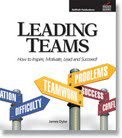
I devoted an entire chapter to team vision in my book, Leading Teams: How to Inspire, Motivate, Lead, and Succeed!  In that chapter I showed what a team vision is; how to obtain it; and how to use it to lead and manage a successful team.  You can access the chapter using this link to my corporate website:  Leading Teams—Sample Chapter

Google researchers came to the same conclusion I did—that it is essential to involve the team members in the process of creating the team vision.  Google put it this way:

Involve the team in setting and evolving the team’s vision and making progress toward it.

Involving the team creates buy-in.  It’s an often overlooked principle: P = O (Participation equals Ownership).  Put another way: We are more likely to support that which we help create.  That principle also applies with team goals and team strategies.  The more involved team members are in the creation of these, the more likely they are to affirm them; embrace them; and support them with dedication and hard work.  Furthermore…

A clear understanding of the team vision is even more critical during crisis, chaos, or change.

When the team has a crystal clear understanding of the team vision, team goals, and team strategy, they also have a beacon that gives them clear direction—even when they are dealing with uncertainty in their circumstances.  A clear team vision, especially, provides a solid, unchanging basis for strategic problem-solving and decision-making.  In the midst of uncertainty and change, it’s the one thing that is certain; the one thing that doesn’t change!  Google encourages leaders:

Even in the midst of turmoil, keep the team focused on goals and strategy.

Often, this is as simple as laying out the work assignments for today, regardless of what the future might hold.  Too many leaders allow their team to get distracted by the potential dangers in the uncertain future, which by definition is unpredictable.  What most teams need at a time like that, is a focus on what they can do right now that makes sense and best serves the organization. 

Here’s an example:  During the coronavirus pandemic, many health service providers here in the U.S. faced potential shortages of personal protective equipment.  Savvy leaders didn’t panic.  They didn’t just close their facility and send their people home.  They took various immediate steps to address the issue and they focused their teams on the vision and the goal of providing care for their patients.

If you are looking for ways to get your team working more effectively together, we can help!  Give us a call and we can show you how our coaching sessions can equip you for more effective leadership.

And for more information about my book, use this link to download a description:  Leading Teams

Until next time… Yours for better leaders and better organizations,

Dr. Jim Dyke – “The Boss Doctor” ™ – Helping you to be a better boss and to have a better boss!

Posted in Communication, Employee Engagement, Employee Motivation, Influence, Leadership, Management, Organizations, Performance Management, Team Culture, Team Dynamics, Team Leadership, Teams | Tagged , , , , , , , | Leave a comment

Google’s Rules

RULE #6 – Help your employees with career development

This guy is on his way UP!! ARE YOU HELPING HIM GET THERE????

In my study of highly “likeable” leaders, I discovered that one of the common characteristics of these highly influential leaders is their investment in the development of their subordinates.  Here’s what I reported in an article I wrote as a result of my research:

Highly likeable leaders … “build up” their people by helping them make progress in their careers. They do this by having conversations with employees about their professional development goals; by assisting them to develop a plan; by assigning work and activities that will contribute to that plan; and by occasionally acting as a sponsor for them—helping them gain visibility with other leaders and departments in the organization, and even recommending them for promotion or for other roles at higher levels.

[BTW… The full article presents ten key habits of highly likeable people, with detailed explanations and practical applications.  It’s available on my website at no charge.  You can access it here:  The Top Ten Habits of Highly Likeable People.]

So… Is this really an important part of effective management???

I often ask my classrooms of management students, “Do you think it’s a good idea for you, as a boss, to have the reputation of being a leader who helps their team members get promoted?”  I always get a resounding (and unanimous) “yes” from the group!

This might seem a bit counter-intuitive.

One might think that a team leader would naturally resist constantly losing their best people—always having to deal with the challenge of leadership succession on their team.  Why would they invite this difficulty by purposefully moving their best people up and out of their team? 

What possible benefits would leaders gain by helping their people develop and get promoted????

Leaders with experience know the answer to this question!

1.  The word spreads quickly and widely in any organization:  If you have any kind of potential, get on this manager’s team—they will help you get promoted!

These leaders get the best people knocking on their door, eager to join their team and give their best effort!  They don’t have to spend a lot of time looking for good people for their teams—good people find THEM.

2.  Their team members are highly engaged, highly motivated, and highly effective.  They know that their hard work has a much better chance of being rewarded, by working with a leader who is invested in their advancement.

3.  They create a team culture of high performance that motivates team members to do their best work.  This happens because their team members work with fellow team members who are just like them—highly engaged, hard-working people—who inspire and encourage one another.

4.  They also experience a highly loyal workforce—subordinates who are much more likely to support their decisions; their strategies; their assignments; their leadership.

5.  For all these reasons, team leaders like this gain a high-performing team that supports their success in their position in the organization.  This, in turn, often leads to the advancement of the team leader/manager.   Also…

6.  Beyond the obvious personal advantages to the manager, there are political benefits to the team leader and the team: valuable visibility with key leaders at higher levels; greater consideration for increasing the team’s budget; better chances for gaining additional personnel.  Executives love success, and so they are more likely to support a successful manager by giving them more resources and expanded opportunities.

So… How do you “help your employees with career development”?  I’ll give you one simple, but powerful example of how a great boss I know accomplished this…

Up Close and Personal

Tony Knight—a good friend and former colleague—took over leadership of a team at a call center.  One of his first acts was to meet with each of his team members in one-on-one sessions.  One of his questions in those meetings was, “Where do you want to go in your career?”  For each person, he offered suggestions about resources they might consider using as part of their personal and professional development: e.g. a book they might find thought-provoking; an evening class at the local community college that would add to their professional skills; one of the many free online courses available to them as an employee of the company.  In their regular monthly one-on-one sessions that followed, he would keep the conversation going, asking them about what they read; what courses they took; what learning they accessed online.  Over time, it was obvious to his team members that he cared about them and was invested in their future.  It was one of many reasons why his team was highly engaged, high-performing, and extremely loyal.

Successful GE CEO Jack Welch offered this opinion on the subject:

Great leaders love to see people grow. The day you are afraid of them being better than you is the day you fail as a leader.

If you are looking for ways to become a better team leader, we can help!  We have experience working with teams and team leaders, helping them to work together more effectively.  And we can help you and your team do the same.  Give us a call, and start your journey of leadership growth today!

Until next time… Yours for better leaders and better organizations,

Dr. Jim Dyke – “The Boss Doctor” ™ – Helping you to be a better boss and to have a better boss!

Posted in Employee Development, Employee Engagement, Employee Motivation, Leadership, Management, Performance Management, Professional Development, Team Culture, Team Dynamics, Team Leadership, Teams | Tagged , , , , , | 1 Comment

Google’s Rules

RULE #5 – Be a good communicator and listen to your team

“Be a good communicator” is another one of those “duh” items on the list—it’s obvious to anyone with even a modicum of management experience.  In fact, I’m guessing that communication skills are at the top of every management expert’s list of essential leadership skills.  James Humes gets right to the point:  “The art of communication is the language of leadership.”  Entrepreneur Richard Branson, the founder of the visionary Virgin organization, agrees: “Communication is the most important skill any leader can possess.”

COMMUNICATION!!! It’s what leadership is ALL ABOUT!!

What is interesting to me is what Google recommends, beyond the obvious generality of “good communication.”  Google puts it this way:

Communication is two-way; you both listen and share information.

This is probably one of the most helpful suggestions on the list!  Interestingly, effective listening has recently become much more valued in leadership and executive circles.  The image of the “telling” or “order-giving” boss is giving way to the “listening” and “collaborating” leader.  Financier and philanthropist Bernard Baruch observed, “Most of the successful people I’ve known are the ones who do more listening than talking.”  More and more leadership experts agree!  Google explains further:

Encourage open dialogue and listen to the issues and concerns of your employees.

No surprise:  I have written about this before.  You will find lots of practical help with one of my newsletters and its companion issue of The Personal Trainer.  You can access them here:

Issue #14 – The Listening Leader and The Personal Trainer – Issue #14

And be sure to check out my blog entry for June 4th of this year, “Can We Talk?” and the added resources I provide that give expanded detail and practical tools.

I also recommend an article I wrote for the journal of a professional association of managers and executives.  I reprinted it as an issue of my own LeadershipTracks newsletter.  You can access it here: 

Issue #11 – Why Should Anyone Listen to YOU?

And you’ll find more details and practical tips in the companion issue of The Personal Trainer.  You can access it here: 

The Personal Trainer – Issue #11

Keep in mind:  Good communication is a team-based exercise, centered on results.  Google puts it this way:

Hold all-hands meetings and be straightforward about the messages and goals of the Team.  Help the team connect the dots.

“All hands” meetings are how a good leader involves the whole team, not just a select few.  It’s the perfect medium for sharing information and keeping the team in touch with what’s going on.  It’s also the easiest way for the leader to stay in touch with what the team is doing.  This kind of two-way communication is vital for the central functions of leadership: planning, evaluation, problem-solving, and decision-making.

“Connecting the dots” is about helping your team understand how their work contributes to the success of the organization; why it is important for them to do a good job; and why it is important for them to do their job in a timely way.  Most employees spend their workdays inside a mental box, without any understanding of how or why their work is connected to the overall success of the organization.  It is the leader’s job to change that—to help the team see the value of what they do, as integral to the organization and as integrated with the work of other teams and departments.

Team leadership is one of the most important applications of leadership.  If you would like some help with this, call us!  We have experience working with teams and team leaders, helping them to work together more effectively.  And we can help you, too!

Until next time… Yours for better leaders and better organizations,

Dr. Jim Dyke – “The Boss Doctor” ™

Posted in Communication, Emotional Intelligence, Employee Engagement, Employee Motivation, Influence, Leadership, Management, Team Culture, Team Dynamics, Team Leadership, Teams | Tagged , , , , , , | Leave a comment

Google’s Rules

RULE #4 – Don’t be a sissy: Be productive and results-oriented

Are you helping your team get the results they need????

It should go without saying (but here goes anyway!)—Success in work is not simply about activity (just putting in time); it’s all about productivity (getting results).  An essential part of the role of a leader is to get their people on board with key goals they are expected to accomplish.  Sometimes those goals are provided by higher-ups in the organization.  But at higher levels in the organization, leaders and teams are often expected (by higher-ups) to have the knowledge and skill needed to determine for themselves what goals and objectives are necessary to support the success of the organization. 

In any case, it’s the leader’s responsibility to engage; motivate; and mobilize team members around those goals—and even more important, to help the team own those goals and really want to accomplish them!  Google puts it this way:

Focus on what employees want the team to achieve and how they can help achieve it. 

In creative industries like Google, this may entail encouraging team members to innovate and invent their own projects and products.  In other organizations, it may be more about helping team members to be engaged with the on-going work and processes they don’t have as much control over—the day-to-day activities and tasks that ultimately contribute to their success and achievement. 

In any case, it’s the leader’s job to help the team gain buy-in of their common goals, and to help employees identify effective paths to complete them.

The most practical way for a leader to do this is to involve the team—involve them in assessing the needs; identifying essential goals; and creating a plan to achieve success.  Here’s a simple way to accomplish this:  Make sure team meetings are highly interactive; collaborative; and participatory!  Beyond that, an effective leader must also superintend these processes, to make sure the right goals are identified and the road to achieve them is accessible.  Google puts it this way:

Help the team prioritize work and use seniority to remove roadblocks.

It is not enough to identify all the worthwhile things the team could do, to contribute to the success of the organization.  A good team leader will help the team to identify the essential things the team must do!  Establishing priorities is the most important step to organizing and managing work.  A team without priorities is a team without direction.

But sometimes, the team needs help gaining the support and contributions of other areas of function, authority, and responsibility in the organization.  For that, they need the team leader to “run interference” for them—to represent them and champion their work with other teams and departments.  It requires the team leader to build effective “internal business alliances” with others in the organization—those whose work provides the support the team needs in order to be effective.  It’s the essence of organizational politics and collaboration.  How important is this?  Building collaborative relationships with key colleagues is the number one priority for anyone moving into a new position of leadership.  And yes, it is often the focus of my work with executive coaching clients, who suffer from inadequate and counter-productive political skills.  Even with remarkable talent, skill, or experience, they often fail to achieve their potential simply because they are such odious colleagues!  You will find plenty of practical help with some of my previous publications.  You can access them here:

LeadershipTracks Newsletter Issue#12 – Make Friends with People and Processes

The Personal Trainer – Issue #12

Building collaborative relationships is at the heart of becoming a person of influence.  And team leaders will have limited success if they don’t build influence and persuasion with others across the organization.  Trying to use coercion and pressure to move others ultimately becomes counter-productive.

So, how does a leader become less coercive and more influential?

Moving from coercion to influence is a matter of adopting the right interpersonal habits in the workplace.  I have written about this before, describing how leaders can develop “likeability” with others in the organization.  You can access a copy of this from my website by using the following link:

The Top Ten Habits of Highly Likeable People

I can’t emphasize enough how important it is for a leader to become a person of influence—it is central to success at all levels of leadership in an organization.  And the higher you rise in any organization, the more your success depends on it!  It becomes highly critical at executive levels.  And the lack of it will absolutely inhibit your advancement and promotion.

This is why much of my work as an executive coach focuses on helping my clients grow in this area—to adopt the constructive habits (both behaviorally and attitudinally) that enable them to be effective in this regard.

If you would like some help with this, call us!  Our confidential one-on-one sessions have been proven to be effective—we have many satisfied clients, including those who have experienced promotions as a result of our coaching.

And if you have a subordinate whose leadership is lacking in this critical area, don’t delay—contact us now and we can provide immediate help!

Until next time… Yours for better leaders and better organizations,

Dr. Jim Dyke – “The Boss Doctor” ™ at Corporate Leadership Initiatives, Inc.

Posted in Communication, Employee Development, Employee Engagement, Employee Motivation, Influence, Leadership, Management, Performance Management, Professional Development, Team Culture, Team Dynamics, Team Leadership, Teams | Tagged , , , , , , | Leave a comment

Google’s Rules

RULE #3 – Express interest in team members’ success and personal well-being

Many leadership pundits emphasize the importance of making personal connections with one’s subordinates.  Suggestions for doing so range from “be yourself” to “treat subordinates fairly” (we all know how easy that is!).  Google puts it this way:

Get to know your employees as people, with lives outside of work.

Once again, the key question is: How do you do that?  The straightforward answer is:  Ask!  Carve out times and occasions when you can have conversations with team members about who they are “as people, with lives outside of work.”

You can start doing this at the very beginning of a team member’s tenure—as part of the on-boarding process with new hires—by using a simple questionnaire you can have new team members complete.   Include questions about their hobbies; special interests; birthdays; anniversaries; personal preferences of different sorts.  Just don’t get too personal with the questions.  And make it voluntary, so team members can feel free to leave some responses blank, or not even fill it out at all if they feel it’s too intrusive.  Over the years, I collected various versions of this kind of survey from my management students, and so I created an example that can be used or edited to fit any team.  You can access it here:  Employee Information Survey

Notice:  There is an entire section in the survey devoted to personal motivational preferences—information that will help the boss to personalize recognition and reward.  This is another way to build personal connections with team members.

Many leaders also include introductory moments at team meetings designed to focus on “lives outside of work.”  I’m referring to discussion questions known as “ice breakers.”  These questions encourage team members to express their personality or share interesting things about themselves.  Here are some examples:

  • When you were little, who was your favorite super hero and why?
  • Who is your hero NOW and why? (e.g. a parent, a celebrity, a mentor)
  • Tell us the story of your first car—what it was like; what you loved or hated about it.
  • If you could visit any place in the world, where would you choose to go and why?
  • What is one goal you’d like to accomplish during your lifetime?

One of the benefits of sharing this kind of information as a group is the bonding that takes place as team members begin to see what they have in common with one another (as opposed to focusing on their differences).  This process also has the added potential of helping team members build trust with one another, as they get to know one another better and more personally.  Patrick Lencioni (author of 5 Dysfunctions of a Team) encourages the use of these kinds of questions for team building and trust building.  Of course, leaders can have similar conversations with team members in one-on-one interactions.  But the benefit is multiplied when the whole team participates—including the leader! 

Google has another suggestion for leaders along these lines:

Make new members of your team feel welcome and help ease their transition.

Don’t assume your team members will automatically do the hard work of adding new people to their already established circle of working relationships.  So you have to take the lead in the important process of embracing newcomers.  You must provide your team members with a positive model of acceptance and inclusion!  

You can do this informally just by including new team members in the day-to-day work of the team:  Encouraging their input in team meetings; inviting their ideas and suggestions; drawing out their perceptions as newcomers with “fresh eyes;” and recognizing their contributions publicly, with the rest of the team.

You can also create a more formal process for inducting new team members. 

Up Close and Personal

One manager I know supervises a very dynamic, high-performing team.  Under her leadership, they adopted a team pin that all the team members wear at work.  It symbolizes their team and its cohesive culture.  It’s in the shape of an electric guitar.  I asked her what it meant.  She looked at me and smiled and said simply, “We ROCK!” 

Her team has a ritual for welcoming new members.  The whole team participates by taking the new hire to lunch (the team picks up the tab for the newby).  Everyone introduces themselves; they have a time of “ice breaking” where they all share a little bit about themselves personally; and they present the new member with the team pin.  It might sound a little corny, but it has an immediate impact on the newcomer’s sense of connection and belonging.  They instantly feel accepted; included; and valued.

Dynamic teams have many different kinds of rituals like this—for interaction; celebration; recognition; bonding; and even grieving.  All of these kinds of practices reinforce team identity and membership in various ways, and repeat the vital message, “we’re all in this together.”

Much of our work consulting with teams and team leaders focuses on elements of team culture like these rituals and practices.  If you would like more help with your own team leadership, we can share tools and techniques like these that will enable you to build a more cohesive and more effective team. 

And if you would like to bring these resources and training to your team of managers and supervisors, give us a call—we’re here to help!

Until next time… Yours for better leaders and better organizations,

Dr. Jim Dyke – “The Boss Doctor” ™

Posted in Communication, Emotional Intelligence, Employee Engagement, Employee Motivation, Influence, Leadership, Team Culture, Team Dynamics, Team Leadership, Teams, Uncategorized | Tagged , , , , , , | Leave a comment

Google’s Rules

#2: Empower Your Team And Don’t Micromanage

A big part of the art of management is finding the right balance between control and freedom in overseeing the work of your team members.  It’s not a simple question of “hands off” versus “hands on” management—it’s more often a question of how much of each is necessary, for each team member and each assignment.  Google’s rules puts it this way:

Balance giving freedom to your employees, while still being available for advice.

How do you do that?  I teach managers the following 6 levels of delegation, to give them a guide to use for each team member and each assignment:

Level 1–I’ll tell you what to do; you do it and report back.  (And maybe also: You check in with me while you are doing it!)

Level 2–Bring me the information; you make a recommendation; I’ll review it; I’ll tell you what to do; you do it and report back.

Level 3–Bring me the information; we’ll review it; we’ll decide together what to do; you do it.  You report back when you’ve done it.

Level 4–Bring me the information; tell me what you’re going to do; I’ll give you my okay; you do it.

Level 5–You decide what to do; you do it; you tell me what you did.

Level 6–You decide what to do; you do it.  Don’t bother reporting back.

The key is to pick the right level for each person, and for each assignment you give them.  You can’t manage your people with a “one size fits all” approach—you need to apply appropriate flexibility as a manager!

Keep in mind:  You want to share these 4 main leadership functions with your team as much as is appropriately possible—planning, evaluation, problem-solving, and decision-making.

Google also recommends:  

Make “stretch” assignments to help the team tackle big problems.

Marcus Buckingham’s advice to managers is to “Gently push your people out of their comfort zone, while making sure they have the support and encouragement they need to succeed.”  That’s how you keep your team and its members continually growing and developing, as workers, as collaborators, AND as leaders!

BTW…Check out my blog post, Getting Things Done Through Other People and the resources it provides—you’ll find a much more detailed guide to effective delegation, loaded with clear instructions and practical tips!  Don’t pass it up—it will be your personal toolkit for Rule #2 success!

If you would like more help with your team leadership, give us a call and we’ll share how our ideas and resources can help you become a better leader and manager and help your team become more effective as well.

And if you would like top-notch training to help your managers and supervisors become more effective in their various leadership roles, let us show you how we can provide practical tools and common-sense wisdom that will equip your people for better performance and greater impact!

Yours for better leaders–and better organizations,

Dr. Jim Dyke – The Boss Doctor

Posted in Authority, Communication, Employee Development, Employee Engagement, Employee Motivation, Leadership, Management, Performance Management, Professional Development, Team Dynamics, Team Leadership, Teams | Tagged , , , , , , , , | Leave a comment

Google’s Rules

#1: Be a Good Coach

Coaching requires TIME and ATTENTION
— Image by © Royalty-Free/Corbis

In early 2009, statisticians inside Google embarked on a plan they code-named Project Oxygen

Their mission was to build better bosses.

In Project Oxygen, the statisticians gathered more than 10,000 observations about Google managers—across more than 100 variables, from various performance reviews, feedback surveys and other reports.  Then they spent time coding the comments in order to look for patterns.  Once they had some working theories, they interviewed managers to gather more data and to look for evidence that supported their notions.

The next step was to code and synthesize all those results — more than 400 pages of interview notes.  And finally, rolling out the results to employees and incorporating them into various training programs.  [NOTE: They continually test them for effectiveness.]  D. Scott Derue, a management professor at the Ross School of Business at the University of Michigan noted “Although people are always looking for the next new thing in leadership, Google’s data suggest that not much has changed in terms of what makes for an effective leader.”

We agree—not much has changed because basic human nature hasn’t changed!

In this new series, we’ll be featuring the results of this unique research project, by highlighting the eight key management behaviors it identified as being essential to effective leadership… starting with this issue.

RULE #1 – Be a good coach

Start by embracing your most basic responsibility as a leader and remind yourself:  MY #1 JOB IS TO HELP MY PEOPLE SUCCEED.  Good coaching comes directly under this heading—it is your job to GET people on the right track to success and KEEP them on the right track to success.  Google’s rules put it this way: 

Provide specific, constructive feedback, balancing the negative and the positive.

When your people get off track and are struggling to succeed, it’s your responsibility to intervene and help them.  That means taking them aside privately to deliver the right kind of constructive criticism.  (If you need help with some specific guidelines and tools, read the blogpost, Turning Correction Into Compliments and download the accompanying Issues of The LeadershipTracks Newsletter and the companion issue of The Personal Trainer.  You’ll find the links to these resources in the blogpost.)

Keeping people on track will require you to give positive feedback to your succeeding team members. 

How often?  One study showed that managers who praise or affirm an employee one more time per day than they normally do… can raise that employee’s productivity by as much as 31% (!). 

How much?  Psychologist and business consultant Marcial Losada has spent ten years of research discovering how important positive feedback is to team productivity.  His extensive mathematical modeling has shown that the minimum ratio of positive to negative feedback required for a team to produce good work is 2.9013.  Other research has shown that the ideal ratio needed for a team to produce their very best work is 6 to 1.  (If you need help with this, go on our archive and get the LeadershipTracks Newsletter Issue #5 and the accompanying issue of The Personal Trainer.)

Google’s rules also recommend:

Have regular one-on-ones, presenting solutions to problems tailored to your employees’ specific strengths.

This is exactly what I do for my executive coaching clients!  In my sessions with clients, I focus on their strengths, and how the client can employ those strengths effectively while avoiding the barriers those same strengths can often create. 

For example, I have a lot of Type A coaching clients, whose drive to produce helps them to rise quickly in their organization.   Here’s the irony:  the same strong personal drive will often work against them at higher levels, when colleagues and team members experience it as “pushy, demanding, bossy, autocratic, and controlling.”  I give these coaching clients tips on how to resolve their “strength ironies” with simple, behavioral solutions.

Sadly, most bosses are not good coaches when it comes to this type of need.  (This is why I have work as an executive coach—it is often easier for a third party like me to lower a client’s defensiveness and work more constructively with them as a result.)

 If you need help to address the strengths that are getting in your way, we can help!  Call us and we can arrange coaching sessions that will immediately help you improve your ability to lead, influence, and collaborate!

Or… If you have a subordinate who is struggling because of problematic behaviors, we can help them in the same way.  Give us a call and we’ll explain how our executive coaching sessions can address their challenges and help them succeed!

And if you would like top-notch training to help your managers and supervisors become more effective in their various leadership roles, we have a proven track record for success—let us show you how we can provide practical tools and common-sense wisdom that will equip your people for better performance and greater impact!

In the meantime…keep checking out this blog! I will be continuing this series with a helpful commentary for each of the Google’s Rules. Don’t miss any of the insightful and practical posts–I guarantee they will take your learning and your leading to the next level!

Yours for better leaders and better organizations!

Dr. Jim Dyke – The Boss Doctor

Helping you to BE a better boss; and HAVE a better boss!

Posted in Authority, Communication, Emotional Intelligence, Employee Development, Employee Engagement, Employee Motivation, Leadership, Learning, Management, Performance Management, Professional Development, Team Dynamics, Team Leadership, Teams | Tagged , , , , , , , | Leave a comment

Goals vs. Systems

I was impressed with this concept from Scott Adams.  During an interview, he referenced his book, How to Fail at Almost Everything and Still Win Big: Kind of the Story of My Life.  In his book he made the point that goals are not the key to success—systems are.

So…what’s the difference?

A goal is where you want to end up.  A system is how you achieve a particular goal—how you get there.  Here are some examples:

Goal:  I want to lose 20 pounds.  System: Weight Watchers.

Goal:  I want to be debt-free.   System: Stop discretionary spending/start paying off debt.

Goal:  I want to have a comfortable retirement.  System: Put money regularly into an IRA.

Company executives often miss this distinction when they decide to do STRATEGIC PLANNING.  (I put it in capital letters, so it looks and sounds as important as executives want it to be!)  Much of strategic planning is merely the setting of business goals with no plan [system] for achieving them!  (The heavily touted BHAG—Big Hairy Audacious Goal—is often the worst offender in this regard!)

Team leaders can make the same mistake when they set goals for their teams.  It’s vitally important that team leaders incorporate their teams in this planning process, and focus on HOW, together, we are going to achieve the goal.  It must be crystal clear what each person on the team is going to do—especially the team leader—to contribute to the overall success.

Before I say anything else, let me be clear about one thing—setting goals is a good thing.  It’s the first step toward success!  And I encourage everyone to think and dream big about what they want to accomplish.  Then vividly imagine what it would look like to achieve that goal.  Don’t forget to also write it down—commit it to pen and paper.  Then talk about it with other people—as much as you can!  Finally, match your goal with specific steps you can take to support the process of achieving it—construct a system to help you get where you want to go!

My goal to build a successful consulting practice was achieved by a simple system:

1.  Confer with successful consultants I know (who also know me) to determine if I have the qualifications and skills necessary.  I did.  I learned I do.

2.  Get my start-up expenses with a simple sale of some of my resources.

3.  Find a business mentor who can show me how to incorporate my business.

4.  Start networking.

5.  Start working with sub-contracts from larger consulting businesses.

6.  Learn how to succeed at business development from someone who knows how.

7.  Do my own business development, to get my own direct contracts.

8.  BINGO…SUCCESS.

So…what’s your goal?  And what system have you identified that will get you there?  Start dreaming…and start thinking strategically!

Yours for better leaders…and better organizations.

Dr. Jim Dyke – The Boss Doctor

Posted in Employee Development, Employee Engagement, Employee Motivation, Leadership, Management, Organizations, Performance Management, Personal Growth, Professional Development, Team Dynamics, Team Leadership, Teams | Tagged , , , , , , | Leave a comment

Can We Talk???

The ability to communicate effectively is routinely designated in HR circles as a “soft skill.”  It’s a bit misleading.  In my many years as an executive coach and leadership consultant, I have concluded that soft skills are absolutely essential for effective leadership at higher levels in every organization.  (Yes, even in the military!) 

I’ll take it one step further.

Effective leaders must not only communicate well, they must also teach their subordinates how to communicate well!  This begins with the example provided by leaders, themselves.  Because…subordinates will tend to emulate; follow; reproduce; their leader’s way of communicating—whether good and bad!  So a leader must provide a good model for their team to follow.  This is an important part of a leader’s greater responsibility—to create a positive communication “climate” with their teams. 

Social scientists use the term “climate” to describe the overall context for communication that exists within a particular group.  It’s part of the culture of a workgroup, team, or larger organization.  And it defines or shapes the communication that takes place within that group.  A positive or “warm” communication climate encourages open, honest, direct, and forthcoming communication among members—especially between leaders and followers.  Issue #10 of the LeadershipTracks newsletter describes a communication climate using six distinctive qualities—defined in contrasting opposites.  You can access it here.

But don’t stop there!

Take a closer look, with the helpful details supplied in the matching issue of The Personal Trainer.  It includes specific examples of what each quality looks like (and sounds like!) in typical workplace conversations.  We need that kind of specificity, because it’s so easy to miss the boat when we communicate—to have the right ideas; content; intent—but to fail in the “delivery.”  Harvard Business School professor Frances Frei alluded to this in a recent interview.  She was discussing the challenge of building trust in our communication.  Here’s what she said:  “So, is it substance – the real logic, or is it style – the communication?  We find that it’s far more often style than substance.”  You will find ample help with your communication style in this expansive issue of The Personal Trainer.  It also includes an entire section showing you how to communicate more effectively with your boss—even if that person presents a bit of a challenge in doing so!  You can access the issue here.

Feel free to use these practical resources to help you achieve more effective communication with your team, your colleagues, and your influential higher-ups.  And please share your thoughts; comments; feedback—I would love to hear from you!

Yours for better leaders, and better organizations…

Dr. Jim Dyke – The Boss Doctor

Posted in Communication, Conflict, Emotional Intelligence, Influence, Leadership, Management, Personal Growth, Professional Development, Team Culture, Team Dynamics, Team Leadership | Tagged , , | 1 Comment

Getting Things Done Through Other People

This is one of the most fundamental (and popular!) definitions of management.  It’s certainly a straightforward way of understanding one of the most important activities of a leader.  But it’s a lot easier said than done, isn’t it?  It turns out to be one of the most challenging aspects of day-to-day managing—giving assignments to subordinates, and making sure the work gets done right and gets done on time.  Because, in the end, the buck really does stop with the leader—they are the one ultimately responsible for the result.  I remember Rick Frost (CEO of Louisiana-Pacific) telling his top tier of executives, “You will never be a leader until you become comfortable taking responsibility for what other people do.  At LP I am responsible for what every person in this company does!”

In my many years as a leader, management consultant, leadership trainer, and executive coach, I have met a significant number of leaders who struggled to be comfortable with that kind of responsibility.  In a wonderful pair of resources, I provide a clear, step-by-step method for successful delegation.  This information is not high-flying theory.  It’s down-and-dirty practical tools and techniques—easy to understand and easy to apply.  This is exactly what I have taught to thousands of managers and aspiring leaders in seminars and workshops all across the country and internationally.  It’s yours for free!  Issue #9 of The LeadershipTracks Newsletter outlines the 6 Levels of Delegating Authority.  You can access it here.  The companion edition of The Personal Trainer shows you exactly how to delegate effectively, using a logical, well-organized approach.  You can access it here.

I encourage you to take a look; use the information with my blessing; and post a comment to let me know what you think!

Posted in Authority, Communication, Employee Development, Employee Engagement, Employee Motivation, Leadership, Management, Performance Management, Team Dynamics, Team Leadership, Teams, Uncategorized | Tagged , , , , , , , | Leave a comment